|
|
|
|
|
|
 |
Reconnecting Roots: Sattvic Temple Food as a Model for Sustainable Mental-health Supportive Hospitality |
P. 1-8 |
|
Supritam Basu *   |
|
Abstract
(12 Views) |
Full-Text (PDF)
(6 Downloads)
| Graphical Abstract
| Highlights
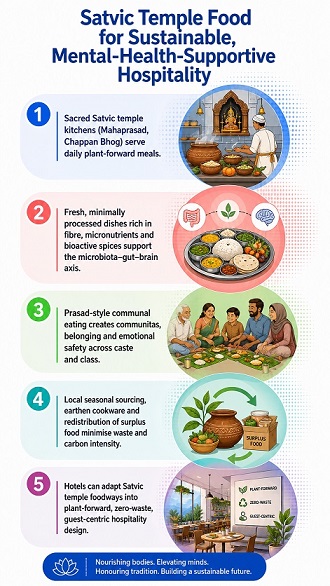
- Sattvic temple food traditions integrate nutrition, spirituality and low-waste practices in Indian hospitality contexts.
- Sattvic temple cuisines such as Mahaprasad and Chappan Bhog provide large‑scale plant‑forward meals embedded in sacred ritual and community.
- Dishes are fresh, minimally processed and rich in whole grains, pulses, vegetables and traditional fats, supporting gut-brain and anti‑inflammatory nutrition science.
- Prasad‑style sharing on banana‑leaf plates dissolves caste and class boundaries, fostering communitas, emotional safety and sense of grace for diners.
- Earthen pots, biomass cooking, local seasonal sourcing and circular redistribution of surplus food together minimize waste and carbon intensity.
- These temple food ways offer a practical model for hotels and wellness resorts to design nutrient‑dense, mentally supportive, low‑carbon dining experiences
|
|
Effects of Tetrasodium Pyrophosphate and Whey Protein Concentrate on Quantitative and Qualitative Characteristics of Gluten-free Breads |
P. 9-17 |
|
Amirhassan Ramezani  , Reza Farahmandfar * , Reza Farahmandfar * |
|
Abstract
(18 Views) |
Full-Text (DOCX)
(5 Downloads)
| Graphical Abstract
| Highlights
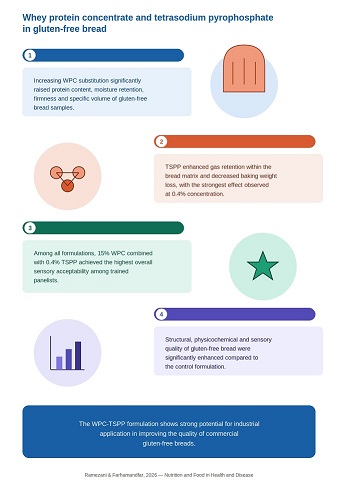
- Whey protein concentrate significantly increased protein content, moisture retention, firmness and specific volume of gluten-free breads.
- Tetrasodium pyrophosphate improved gas retention and decreased baking weight loss, particularly at 0.4% concentration.
- The combination of 15% whey protein concentrate and 0.4% tetrasodium pyrophosphate received the highest sensory acceptability from the panelists.
- Structural, physicochemical and sensory quality of gluten-free bread were significantly enhanced.
|
|
Longitudinal Changes in Serum 25-hydroxyvitamin D Levels after Periodontal Therapy in Patients with Chronic Periodontitis: A Single-arm Prospective Study |
P. 19-24 |
|
Amin Rajabzadeh Rajabzadeh Kanafi , Yasamin Saadat Saadat Rouhi , Saman Maroufizadeh , Bardia Vadiati Saberi * |
|
Abstract
(13 Views) |
Full-Text (PDF)
(8 Downloads)
| Highlights
- Periodontitis is a multifactorial inflammatory disease induced by bacterial plaque. This is characterized by progressive destruction of the tooth-supporting structures, including the periodontal ligament and alveolar bone.
- The relationship between periodontal and systemic diseases may occur through two major mechanisms that often overlap.
- The vitamin plays essential biological roles in bone mineralization and preservation of calcified tissues, including teeth. In addition to its classical skeletal functions, vitamin D exerts pleiotropic immunomodulatory effects.
- Serum vitamin D significantly decreased post periodontal therapy.
|
|
Mindful Eating and Its Role in Physical and Mental Health: A Comprehensive Review |
P. 25-30 |
|
Arpith Kumar L M * |
|
Abstract
(13 Views) |
Full-Text (PDF)
(6 Downloads)
| Graphical Abstract
| Highlights
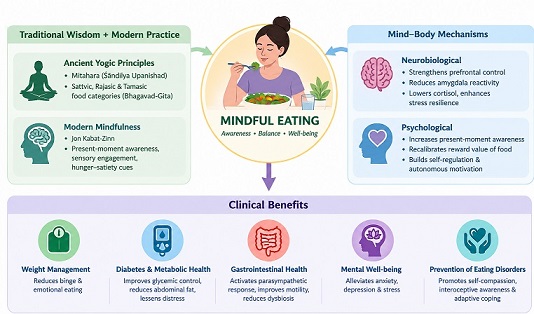
- Mindful eating integrates present-moment awareness, sensory engagement, and recognition of hunger and satiety cues.
- Ancient yogic dietary principles and contemporary mindfulness provide complementary foundations for mindful eating.
- Mindful eating engages neurobiological and psychological pathways that support stress regulation, self-regulation, and healthier eating behaviours.
- Evidence highlights its potential as a holistic, non-pharmacological approach for weight management, metabolic and gastrointestinal health, mental well-being, and prevention of disordered eating.
|
|
Phytochemical and Pharmacological Insights into Ziziphus jujuba: Mechanisms Associated to Fatigue, Stress and Recovery Physiology |
P. 31-45 |
|
Babak Hooshmand-Moghadam * , Abbas Ali Gaeini , Amir Rashidlamir |
|
Abstract
(13 Views) |
Full-Text (PDF)
(7 Downloads)
| Graphical Abstract
| Highlights
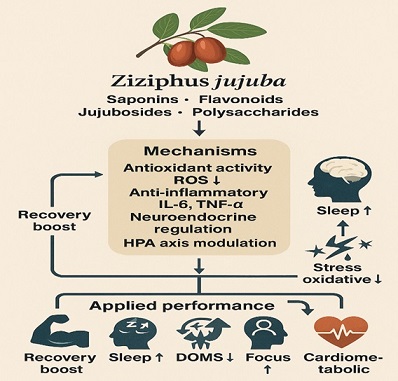
- Ziziphus jujuba shows neuroendocrine, antioxidant and anti-inflammatory actions linked to sports recovery.
- Key phytochemicals (e.g., jujubosides, flavonoids and saponins) affect sleep quality, stress resilience and fatigue.
- The plant demonstrates promising effects on glycemic control, lipid metabolism and cardiovascular regulation in active populations.
- Preclinical and emerging clinical studies suggest adaptogenic and recovery-enhancing benefits in exercise contexts.
- Practical dosing strategies and sport-specific applications are proposed for nutritionists and performance practitioners.
- The review offers a translational model linking traditional use with modern exercise science and sport nutrition frameworks.
|
|
|
|
|
|
|
|
|
|